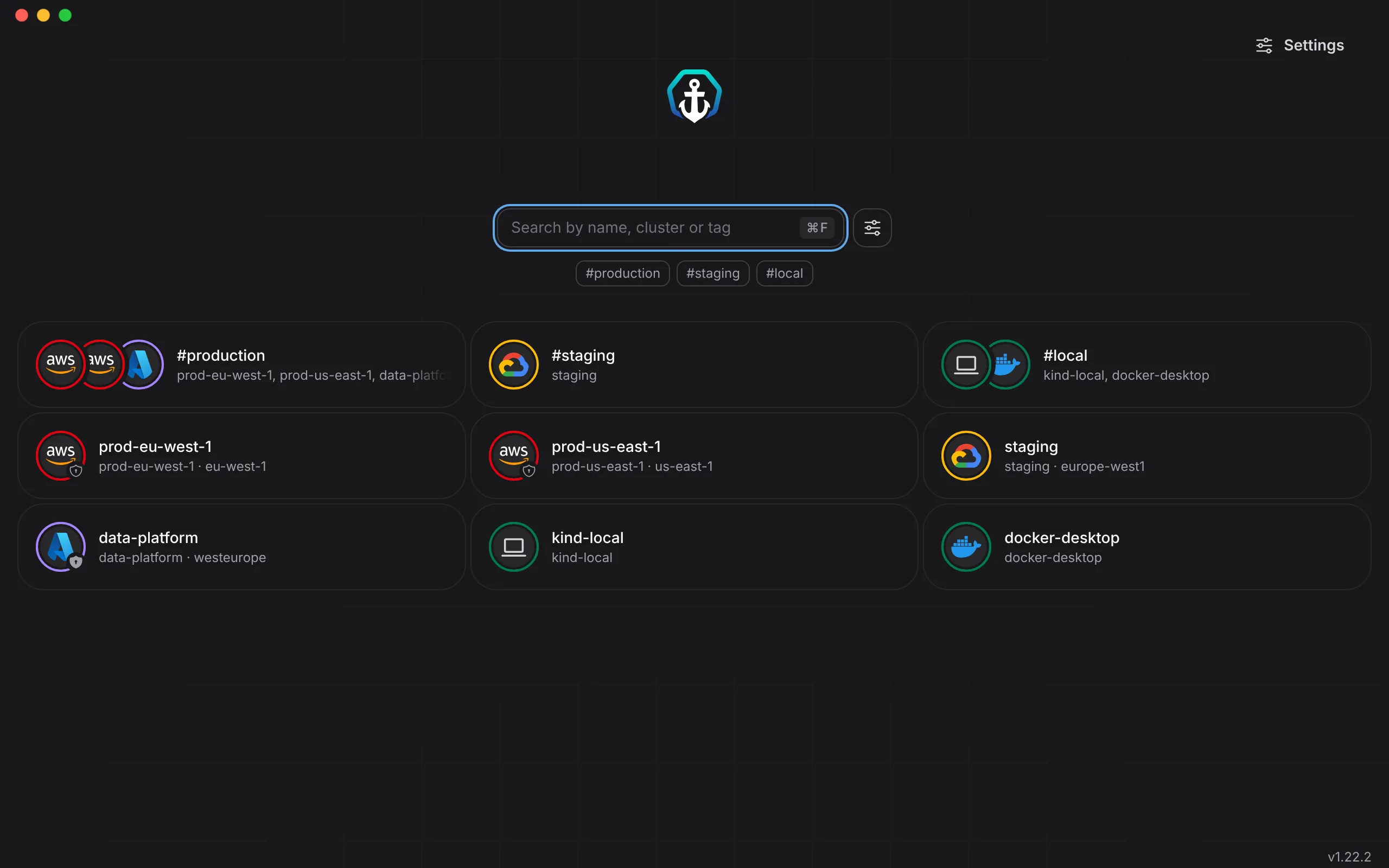
If kubectl works on your machine, Aptakube does too. There's no account to create and nothing to install on your clusters: download the app, open it, and your clusters are there.
It's not an Electron app either, so the download is under 30 MB and it starts in a moment.
Uses your kubeconfig
Aptakube reads the same kubeconfig files as kubectl: ~/.kube/config by default, or every file listed in the $KUBECONFIG environment variable. Keep kubeconfigs somewhere else? Add more files or whole folders in the preferences, and merge them if one file has the clusters and another the credentials.
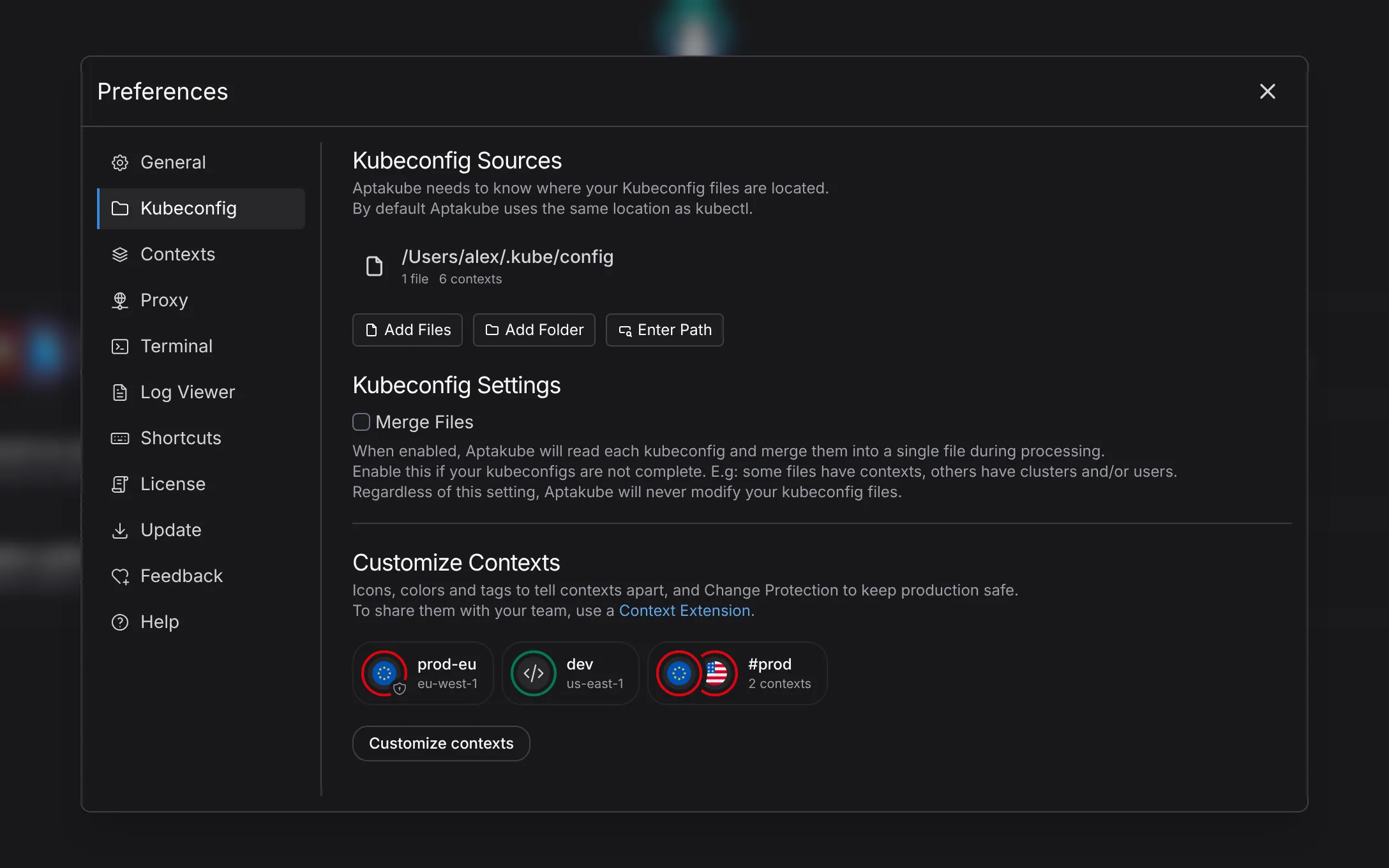
Aptakube never writes to your kubeconfig files, whatever you do in the app. Icons, colors and tags you give your contexts are stored in Aptakube's own preferences.
Any cluster, any way you sign in
Use Aptakube with any Kubernetes cluster: EKS, GKE, AKS, other clouds, on-premises, or a local kind, minikube or Docker Desktop cluster.
It supports the same ways to authenticate as kubectl: client certificates, tokens, and credential plugins such as the AWS CLI, gke-gcloud-auth-plugin and Azure's kubelogin. When your SSO session for EKS, GKE or AKS expires, Aptakube shows a sign in button that starts the login for you, so you don't need to switch to a terminal.
Nothing to install on the cluster
Aptakube runs on your machine and talks to each cluster's API server directly, like kubectl. There's no agent to deploy and no permissions to grant beyond the ones you already have, and your credentials never leave your machine.
Clusters don't need to be connected to each other to use them together in the multi-cluster view, either. They can be in different regions or clouds.